Guide
The Ewha Global Partnership Program (EGPP): A Full Ride for Women, Bachelor's to PhD (2027)
Most fully funded Korean scholarships are for graduate study. EGPP is one of the very few that funds women at the bachelor's level too, and it covers tuition, housing, and a monthly stipend. Here is exactly who qualifies and how to apply.

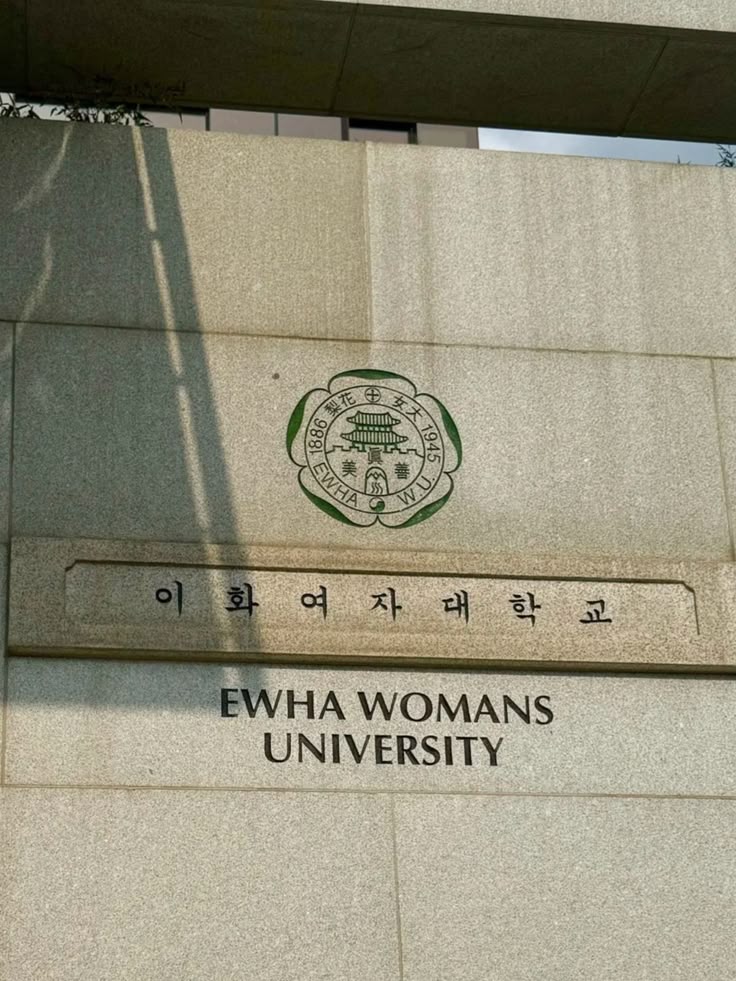
The Ewha Global Partnership Program, usually written EGPP, is Ewha Womans University's scholarship for women from developing countries. It is fully funded, and unlike most Korean full rides it is open at both undergraduate and graduate level. If you are a woman from an eligible country, it is one of the strongest funding routes into a Korean degree that exists.
- Women only. Ewha is a women's university, so EGPP is open to female applicants only.
- Bachelor's to PhD. EGPP funds undergraduate freshmen, transfers, master's, doctoral, and combined master's-doctoral students.
- A true full ride. It covers full tuition including the admission fee, the dormitory housing fee, and a monthly stipend.
- Developing countries only. Eligibility follows the OECD DAC list of aid recipients, which includes most of Asia, Africa, and Latin America.
- You apply with your admission. There is no separate scholarship cycle. You submit one extra form (Scholarship Form 4) with your online application.
What EGPP is
EGPP sits at the top of Ewha's scholarship ladder for international students. Ewha runs a range of awards for women who apply through its special admission for international applicants, from partial tuition waivers tied to your Korean level up to full rides. EGPP is the most generous of them, and the one aimed squarely at women from developing countries who show leadership potential.
Because Ewha admits women only, every applicant to the university, and therefore to EGPP, is a woman. If you are looking at Korean scholarships and you are a man, this one is not open to you, but the wider map in our fully funded scholarships guide has options that are.
Who EGPP is for
Three things define an EGPP candidate:
- You are a woman. Ewha is a women's university.
- You are from a developing country. Eligibility follows the OECD DAC List of ODA Recipients (the full list is below).
- You show leadership potential. Selection is not on grades alone. Ewha describes the award as building global women leaders, and the committee reads your application for that potential.
On top of this, you and both of your parents must be non-Korean nationals. This is the same nationality rule that runs across Korean special admissions for international applicants.
Eligible countries
EGPP is open to citizens of the countries and territories on the OECD DAC List of ODA Recipients. This is the official list the OECD maintains of developing economies that can receive aid, and Ewha ties EGPP eligibility to it directly. Here is the full list, grouped by income category.
Least Developed Countries: Afghanistan, Angola, Bangladesh, Benin, Burkina Faso, Burundi, Cambodia, Central African Republic, Chad, Comoros, Democratic Republic of the Congo, Djibouti, Eritrea, Ethiopia, Gambia, Guinea, Guinea-Bissau, Haiti, Kiribati, Lao People's Democratic Republic, Lesotho, Liberia, Madagascar, Malawi, Mali, Mauritania, Mozambique, Myanmar, Nepal, Niger, Rwanda, Sao Tome and Principe, Senegal, Sierra Leone, Solomon Islands, Somalia, South Sudan, Sudan, Tanzania, Timor-Leste, Togo, Tuvalu, Uganda, Yemen, and Zambia.
Other Low Income Countries: Democratic People's Republic of Korea (North Korea) and the Syrian Arab Republic.
Lower Middle Income Countries: Algeria, Bhutan, Bolivia, Cabo Verde, Cameroon, Congo, Côte d'Ivoire, Egypt, Eswatini, Ghana, Honduras, India, Iran, Jordan, Kenya, Kyrgyzstan, Lebanon, Micronesia, Mongolia, Morocco, Nicaragua, Nigeria, Pakistan, Papua New Guinea, Philippines, Samoa, Sri Lanka, Tajikistan, Tokelau, Tunisia, Ukraine, Uzbekistan, Vanuatu, Viet Nam, and Zimbabwe.
Upper Middle Income Countries and Territories: Albania, Argentina, Armenia, Azerbaijan, Belarus, Belize, Bosnia and Herzegovina, Botswana, Brazil, China (People's Republic of), Colombia, Costa Rica, Cuba, Dominica, Dominican Republic, Ecuador, El Salvador, Equatorial Guinea, Fiji, Gabon, Georgia, Grenada, Guatemala, Guyana, Indonesia, Iraq, Jamaica, Kazakhstan, Kosovo, Libya, Malaysia, Maldives, Marshall Islands, Mauritius, Mexico, Moldova, Montenegro, Montserrat, Namibia, Nauru, Niue, North Macedonia, Palau, Panama, Paraguay, Peru, Saint Helena, Saint Lucia, Saint Vincent and the Grenadines, Serbia, South Africa, Suriname, Thailand, Tonga, Türkiye, Turkmenistan, Venezuela, Wallis and Futuna, and West Bank and Gaza Strip.
What EGPP covers
EGPP is a full ride in the real sense: it removes tuition, gives you a place to live, and pays you a monthly stipend to cover daily costs.
- Full tuition, including the admission fee. You pay nothing toward tuition for the standard length of your degree.
- Dormitory housing fee. Covered for recipients who live in an on-campus dormitory.
- A monthly stipend. Paid to help with living costs. Ewha does not publish a fixed figure, and third-party scholarship sites quote conflicting amounts, so confirm the current stipend with the International Student Affairs Team rather than trusting a number you read elsewhere.
How long the funding runs depends on the degree you enter.
| Level | Semesters funded | What you need first |
|---|---|---|
| Undergraduate (freshman) | Up to 8 | High school completion |
| Undergraduate (transfer) | Up to 4 | Prior university credits or an associate degree |
| Master's | Up to 4 | A bachelor's degree |
| Doctoral | Up to 6 | A master's degree |
| Combined master's and doctoral | Up to 6 | A bachelor's degree |
To keep the award each semester, you have to meet a minimum GPA and credit requirement. Slip below it and the funding can be reduced or withdrawn, so EGPP rewards students who stay on track.
Here are the concrete numbers that matter, from Ewha's Fall 2026 international admissions guide.
| Item | Amount |
|---|---|
| Application fee | 150,000 KRW (about 150 USD), paid to apply |
| Undergraduate tuition, per semester | About 4.6M to 6.4M KRW, fully covered |
| Graduate tuition, per semester | About 6.4M to 10.6M KRW, fully covered |
| Dormitory fee, per semester | About 0.9M to 3.2M KRW by room type, covered for dorm residents |
| Monthly stipend | Paid, but Ewha publishes no fixed figure. Confirm with the ISA team. |
| Bank balance for the visa (CoA) | 20,000,000 KRW minimum. A general requirement; a full ride makes this easy to satisfy. |
| Language bar (transfer and graduate) | TOPIK Level 4, or TOEFL iBT 80 / IELTS 6.0 / New TEPS 326 |
If you are applying for a bachelor's degree
Undergraduate applicants choose a major (or a division or department) when they apply. Two entry points exist: freshman entry, funded for up to eight semesters, and transfer entry for students who have already completed university credits elsewhere, funded for up to four.
You do not need a Korean test to apply as a freshman. That surprises many applicants, but it is how Ewha runs undergraduate admission for international women. There are two things to know, though:
- From 2025, most incoming undergraduates spend their first year in the Global Scholars Program within the HOKMA College of General Education, taking Korean and foundational courses before moving into their major. The Division of International Studies and the College of Nursing are the exceptions.
- Every undergraduate has to reach TOPIK Level 4 before graduation (again, except the Division of International Studies). So while you can start without Korean, you cannot finish without it. Plan your language study from day one.
If you would rather study fully in English, read our guide on studying in Korea in English first, and look closely at Ewha's Division of International Studies, where all major courses are taught in English.
If you are applying for a master's or PhD
Graduate applicants pick a major within a department, and the language bar is higher at the point of application. You need to meet one of these:
- TOPIK Level 4 or above, or
- an English test: TOEFL iBT 80, IELTS 6.0, or New TEPS 326, or
- completion of school or university education taught entirely in Korean or English.
Graduate applicants also write a study plan rather than a personal statement, and a recommendation letter from a professor who taught or supervised you is encouraged (not required). It has to come through Ewha's online recommendation system, so line your recommender up early.
The nationality fine print
The rule that trips people up most is nationality. To be eligible:
- You and both of your parents must hold non-Korean nationality.
- If you or either parent has ever held Korean nationality, it must be renounced before the application period, and you will need documents proving it.
- Dual nationals who hold Korean nationality are not eligible.
This is strict and it is checked, so if your family situation is complicated, sort out the paperwork well before you apply.
How to apply
You apply for EGPP at the same time as your admission, through Ewha's International Student Affairs Team. There is no separate scholarship application window.
How to apply for the Ewha Global Partnership Program
Choose one program
Pick a single undergraduate major or graduate department and confirm it is open for your intake. You may apply to only one program.
Prepare and authenticate your documents
Gather your graduation certificate, transcripts, and passports for you and both parents. Documents issued outside Korea need apostille or consular authentication, and Chinese documents need CHSI verification.
Apply online and pay the fee
Submit the online application on the International Student Affairs Team website at isa.ewha.ac.kr during the application window, and pay the application fee of 150,000 KRW.
Upload the Scholarship Application Form (Form 4)
To be considered for EGPP, fill out Ewha's Scholarship Application Form, save it as a PDF, and upload it with your application. Skip this form and you are not in the scholarship pool.
Add your statement and recommendation
Undergraduate applicants write a personal statement. Graduate applicants write a study plan and arrange a recommendation letter through Ewha's online system.
Submit originals after the preliminary decision
If you are offered preliminary admission, send the original hard copies of your documents by post by the stated deadline. Missing them can cost you the offer.
Meet any language deadline, then await the final decision
If you selected a TOPIK score as still to be obtained, submit proof by the language deadline. Ewha then announces the final admission and scholarship decision together.
When it happens
Exact dates move a little each year, but the rhythm of a Fall intake is stable. Here is the 2026 cycle as the pattern to expect for 2027 and beyond.
| Stage | When (Fall 2026 cycle) |
|---|---|
| Online application and fee | Early March to early April |
| Preliminary admission decision | Late April |
| Submit original documents by post | Early to mid May |
| Language proof deadline, if pending | Late May |
| Final admission and scholarship decision | Mid June |
| Tuition payment and enrollment | July |
| Orientation and course registration | Mid August |
| Semester begins | September 1 |
What documents you will need
At the application stage you upload PDFs. The core set is:
- The online application form, with your photo.
- A personal statement (undergraduate) or a study plan (graduate).
- The Scholarship Application Form (Form 4), for scholarship applicants.
- Certificate of (expected) graduation and full academic transcripts.
- A language test score or certificate, where required for your track.
- Passport copies of you and both parents, plus a document proving your relationship to them.
If you are offered admission, you then submit authenticated originals by post. For the money side of the visa, see our guide on financial proof for a Korean student visa, though a full scholarship makes that step much easier.
What the full ride is actually worth
To see why EGPP matters, it helps to know what Ewha tuition costs. These are approximate 2026 per-semester figures. The first year or first semester also includes the admission fee, which EGPP covers.
| Program area | Approx. tuition per semester |
|---|---|
| Undergraduate: liberal arts, social sciences, business | 4.6M to 5.6M KRW |
| Undergraduate: sciences, engineering, nursing, AI | 5.5M to 6.2M KRW |
| Undergraduate: music, art and design | 6.3M to 6.4M KRW |
| Graduate: humanities and social sciences | 6.4M to 7.4M KRW |
| Graduate: sciences and engineering | 8.4M to 9.6M KRW |
| Graduate: medicine | up to 10.6M KRW |
Multiply those by the number of semesters EGPP funds, add housing and a monthly stipend, and the award is worth tens of millions of won across a degree.
EGPP or GKS: which should you chase?
The Global Korea Scholarship (GKS) is the government full ride, and it is the one most applicants have heard of. EGPP is different in a few ways that can make it the better bet for the right person.
Keeping the scholarship
EGPP is not a one-time award you can coast on. Recipients keep it by meeting a minimum GPA and credit requirement every semester. Ewha's international scholarship committee reviews recipients, and can reduce or end the award for students who fall short, cannot continue their studies, or break the university's academic integrity or conduct rules. Treat the first semester as the one that sets your trajectory.
What to do next
- Confirm your country is on the current OECD DAC list and that you meet the nationality rule.
- Check the EGPP scholarship listing and the Ewha Womans University page for the full ladder of Ewha awards.
- Take the quiz to see every Korean scholarship you qualify for, not just this one.
- If you are weighing options, read the fully funded scholarships guide and the GKS guide.