Guide
Academy of Korean Studies graduate admissions
There is a graduate school in Korea, funded and run by the Korean government, that waives full tuition for every international student it admits, pays many of them a monthly living allowance, and teaches one of its majors entirely in English. Almost nobody outside the field has heard of it. Here is the whole application, taken from the school's own guideline.
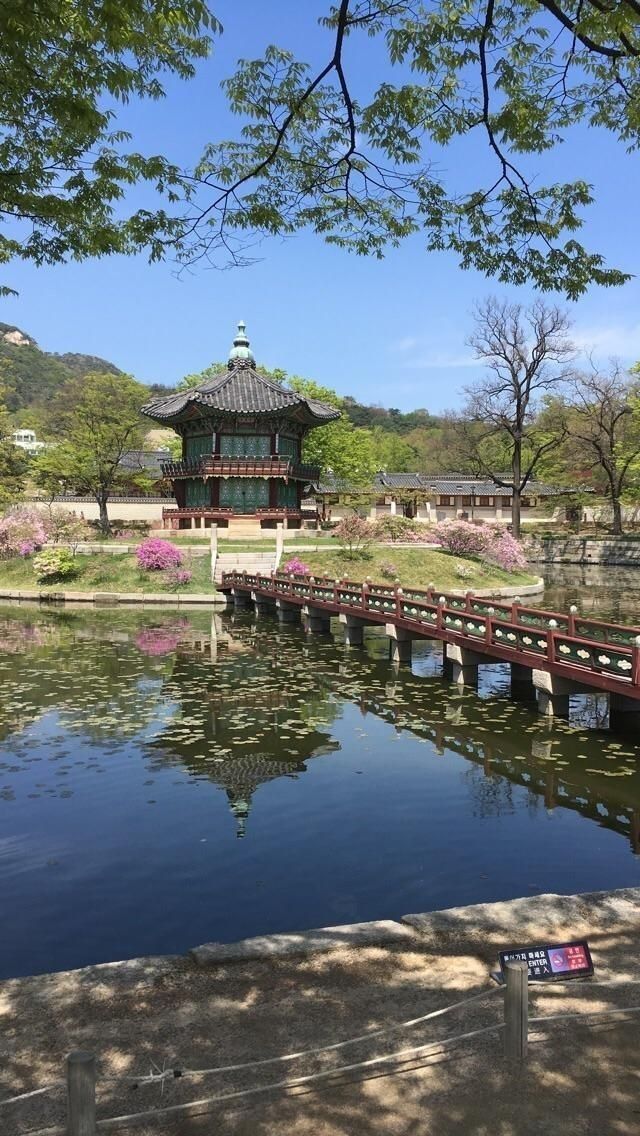
The Graduate School of Korean Studies is the graduate school of the Academy of Korean Studies, a research institution funded and administered by the Korean government. It was established in 1980 to train scholars of Korea, and it is small on purpose: about 200 students in total, roughly 110 of them international, drawn from 38 countries, at a student-to-faculty ratio of 5 to 1.
It is not a normal university, and you should understand that before you spend a month on the application. There is no undergraduate program. Everything is a master's, a doctorate, or a one-year non-degree research placement, and everything is in the humanities and social sciences as they relate to Korea. If you want to study engineering, or business, or medicine, this is the wrong school. If you want to study Korean history, philosophy, religion, music, art history, politics, sociology, or language and literature, it is one of the best-funded places in the world to do it.
- Tuition is fully waived for every admitted international student, for the whole coursework period: 2 years for a master's, 3 for a doctorate. This is automatic on admission, not a competition.
- The living stipends are a separate matter. The POSCO Global Scholarship and the Government Grant are awarded by committee from among the admitted, so plan your finances as though you will not get one.
- Most majors are taught in Korean and require TOPIK level 4 to apply. One major, Korean Cultural Studies, is taught in English and requires no TOPIK at all.
- You apply through studyinkorea.go.kr, the Korean government's portal, not through a university website. The fee is 50,000 KRW (or 50 USD) and is not refundable.
- Missing any of documents 1 through 9 disqualifies you. The recommendation letter is the one people lose on: it must come from a professor, by email, from the recommender's own account.
- Everyone who passes the paper screen is interviewed, in person or by video. Not turning up is an automatic disqualification.
- The school asks you not to use AI to write your personal statement or research plan. Grammar fixes are fine; drafted essays and whole-sentence translation are not.
What you can actually study
The school is organised into four divisions. The master's program offers 13 majors and the doctoral program 12: Korean Cultural Studies is the exception, offered at master's level only.
| Division | Majors |
|---|---|
| Humanities | Korean History; Diplomatics and Bibliography; Philosophy; Korean Linguistics and Korean Literature |
| Culture and Arts | Anthropology and Folklore; Religious Studies; Musicology; Art History; Cultural Informatics and Human Geography |
| Social Sciences | Political Science; Sociology; Education |
| Global Korean Studies | Korean Cultural Studies (master's degree only, taught in English) |
The school admits about 40 students a year across the degree programs, plus a couple into the research (non-degree) program. Coursework runs two years for a master's and three for a doctorate, on a two-semester year that starts in March and September, with 15-week semesters.
The money
This is the part that makes the school unusual, so it is worth being precise about what is guaranteed and what is not.
| Award | Who gets it | What it covers |
|---|---|---|
| Tuition-fee Exemption Scholarship | Every admitted international student. No separate application. | Full tuition every semester, for 2 years (master's) or 3 years (doctoral). Continues unless you are placed on academic probation or face disciplinary action. |
| Government Grant | Up to 15 students per semester, selected by the school's committee from among the final successful applicants. No nationality restriction. No separate application. | 800,000 KRW per month, for 1 year, renewable annually on evaluation. If you are not selected, you can reapply each semester. |
| POSCO Global Scholarship | About 3 students admitted in the spring semester, recommended by the school's committee and then interviewed by the POSCO TJ Park Foundation. Open only to nationals of the designated countries listed below. No separate application. | 1,000,000 KRW per month, plus a 1,000,000 KRW settlement grant, plus a 100,000 KRW per month health insurance subsidy, plus Korean language learning. 2 years (master's) or 3 years (doctoral). |
The POSCO award is restricted by nationality. As of the 2026 guideline the designated countries are Australia, China, India, Indonesia, Japan, Kazakhstan, Malaysia, Myanmar, the Philippines, Saudi Arabia, Singapore, Thailand, the United Arab Emirates and Vietnam in Asia; Argentina, Brazil, Mexico and the United States in the Americas; Germany, Italy, Poland, Slovakia, Türkiye and the United Kingdom in Europe; and Egypt, Morocco and South Africa in Africa. Korean nationals, including dual citizens, cannot be recommended for it.
Who can apply
Two gates: your nationality, and the degree you already hold.
Nationality. You must meet one of two conditions. Either you and both of your parents are foreign nationals. Or you, whether a foreign national or a Korean national living overseas, completed your education outside Korea, at a level that corresponds to Korean elementary, middle, high school and university education.
Your degree.
| Program | What you must hold by the start of the semester |
|---|---|
| Master's | A bachelor's degree or equivalent. Your undergraduate major does not have to be related to the major you apply for. |
| Doctoral | A master's degree or equivalent. In principle you apply for the same or a closely related major, though many majors accept any master's background. |
| Research (non-degree) | A bachelor's degree or equivalent, or higher. |
For the doctoral program, the guideline's Attachment 1 lists which master's majors each doctoral major accepts. Several say simply "any majors are acceptable": Korean History, Philosophy, Anthropology and Folklore, Religious Studies, Cultural Informatics and Human Geography, Political Science, Sociology, and Education. Others are narrower, and the final call rests on the courses you took and your master's thesis topic. If you are switching fields, read that attachment in the PDF above before you assume you are eligible.
The language requirement
| If you apply for | You must submit |
|---|---|
| Korean Cultural Studies (the English-taught major) | An English score: TOEFL iBT 80 (for tests taken before 21 January 2026) or 4.5 (on or after that date), IELTS Academic 6.5, or TEPS 301. No TOPIK certificate is required, though holding one may count in your favour. |
| Every other major | A valid TOPIK or TOPIK IBT certificate of level 4 or higher, as of the application deadline. Level 5 or 6 is given preference in selection. |
The English score must be from a test taken within two years of the application deadline. MyBest scores and the TOEFL iBT Home Edition are both accepted; TOEFL ITP is not. The AKS TOEFL destination code is 2067. You are exempt from the English score entirely if you are a national of a country where English is an official language, or if you hold a degree from a university or graduate school where English was the medium of instruction.
The timeline
The school runs two intakes a year. Both cycles are published in the same guideline, so you can see the full shape of the year.
| Step | 2026 Fall entry | 2027 Spring entry |
|---|---|---|
| Online application and fee payment | 10:00 on 9 March to 17:00 on 20 March 2026 | 10:00 on 31 August to 17:00 on 11 September 2026 |
| Recommendation letter deadline | 17:00 on 25 March | 17:00 on 16 September |
| Interviewee list announced | 17:00 on 28 April | 17:00 on 28 October |
| Interviews | 6 to 8 May | 4 to 6 November |
| Final result announced | 17:00 on 29 May | 17:00 on 27 November |
| Original documents due by post | 17:00 on 3 July | 17:00 on 4 January 2027 |
| Semester begins | 1 September 2026 | 1 March 2027 |
Two details in that table matter more than they look. The application window is eleven days long, so if you find this school in February you have very little time. And the recommendation letter deadline falls five days after the application closes, which means your recommender is still working after you have finished, and you have no way to submit it for them.
How to apply, step by step
You do not apply on the school's own website. You apply through the Korean government's Study in Korea portal.
How to apply to the Graduate School of Korean Studies as an international student
Line up your language certificate first
Everything else can be assembled in a hurry. A TOPIK level 4 certificate cannot. Sit the test early enough that the certificate is valid as of the application deadline. If you are applying for Korean Cultural Studies, book TOEFL, IELTS or TEPS instead, and note the score must be from within the last two years.
Ask your recommender, and ask early
It must be a professor at the university where you studied, who can judge your academic ability. If that is impossible, another academic or a recognised expert in the field is acceptable. A manager at work is explicitly not acceptable. They complete the prescribed form and email it themselves, from their own email account, to admission_intl@aks.ac.kr. A letter sent from your account is rejected.
Write the personal statement and the research plan
Both are on prescribed forms in the guideline. The personal statement runs about 2 pages at 11pt: your background, academic life, activities, outlook, strengths and weaknesses, and your study plan. The research plan runs about 5 pages: your topic, why you chose it, a review of previous research, your method and what is distinctive about it, and a bibliography. Both must be written in Korean, unless you are applying for Korean Cultural Studies, in which case English is allowed.
Apply online at studyinkorea.go.kr and pay
Go to the portal, choose Applying for Admission, select the Graduate School of Korean Studies at the Academy of Korean Studies, and fill in your details. Your English name must match your passport exactly. Upload scanned copies of your certificates rather than posting originals. Pay the 50,000 KRW (or 50 USD) fee to submit. Once paid, the application cannot be cancelled and the fee is not returned.
Sit the interview
If you pass the document screening, your name appears on the interviewee list and you are interviewed, in person or by video. This is not optional: applicants who do not take part are automatically disqualified.
If you are selected, post your original documents
Only after the result is announced do you post original, apostilled copies of your graduation certificate and transcripts, along with your bank balance certificate, family relation documents and health check. Inadequate submission can cancel your admission. Start gathering apostilles early: they take longer than people expect.
The 16 documents
The guideline lists 16 documents, split across three moments: uploaded online during the application, emailed separately, or posted as originals only if you are selected.
| # | Document | When |
|---|---|---|
| 1 | Application form | Online, during the application period |
| 2 | Personal statement (prescribed form) | Online |
| 3 | Research plan (prescribed form) | Online |
| 4 | Graduation certificate(s) for all previous degrees | Online, then the original with apostille by post if selected |
| 5 | Official transcripts for all previous degrees | Online, then the original with apostille by post if selected |
| 6 | Official language score report (TOPIK, TOEFL, IELTS or TEPS) | Online |
| 7 | Proof of nationality (passport pages or a notarised certificate) | Online |
| 8 | Application fee, 50,000 KRW or 50 USD | Online payment |
| 9 | Letter of recommendation (prescribed form) | Emailed by the recommender, by 25 March in the 2026 Fall cycle |
| 10 | Abstract of your master's thesis | Online, if you are a doctoral applicant who wrote one |
| 11 | Soft copy of your master's thesis | Emailed before the interview, if applicable |
| 12 | Certificate of family relations or birth certificate | By post, if selected |
| 13 | Verification of deposit (bank balance certificate) | By post, if selected |
| 14 | Letter of sponsorship (prescribed form) | By post, if someone else funds you |
| 15 | Certificate showing your relationship to your sponsor | By post, if applicable |
| 16 | Health check results | By post, if selected. Dormitory residents also submit a tuberculosis (chest X-ray) result. |
A few requirements inside that list are easy to get wrong:
- Transcripts must show one of three things for your whole period of study: a CGPA with its scale (say 3.7 out of 4.0), a percentile (83 out of 100), or a class rank (5th of 50). If yours shows none of these, ask your university for an official document explaining its grading system.
- Certificates must be in Korean or English. If they are in another language, they must be translated and notarised.
- Doctoral applicants submit both degrees, bachelor's and master's, for certificates and transcripts alike.
- If you are still studying, submit a certificate of enrolment and transcripts showing your latest grades, then send the apostilled graduation certificate and final transcripts before the semester begins.
Apostille, and the exception for China
Once you are selected, your graduation certificate and transcript have to be verified, and how depends on where you studied.
| Where your degree is from | What you submit |
|---|---|
| A country in the Apostille Convention | An apostille on the diploma and on the official transcript. |
| China | Verification of degree and transcripts through CHSI (chsi.com.cn). Note: verification of DEGREE, not verification of graduation. Only the former is accepted. |
| A country outside the Apostille Convention | Verification by a Korean consulate in the country where you studied, or by that country's consulate in Korea. |
| Korea | Nothing extra. An original certificate and transcript is enough. |
Apostilles must be in English, or come with a notarised translation. Our apostille guide walks through the process country by country if this is new to you.
The money you must prove you have
To get the Certificate of Admission you need for a D-2 student visa, you send an original bank balance certificate by post, in your own name or an immediate family member's.
| Your situation | Minimum balance |
|---|---|
| You receive the school's Government Grant | 5,280,000 KRW |
| Everyone else | 14,880,000 KRW |
The statement must be current, produced within 30 days of submission. Certificates issued by banks in China must additionally show a deposit freeze of at least 30 days. If the account is a family member's, add the letter of sponsorship and a certificate of family relations. And if another institution is funding you, a scholarship confirmation from them can replace the bank documents.
How you are judged
Selection has two stages, and both matter.
Document screening. Everyone who meets the requirements is screened on their research plan, academic ability, language proficiency, and academic background as shown in the personal statement and the recommendation letter. Note what leads that list: the research plan. This is a research institution, and a five-page plan with a real question, a genuine review of prior work, and a defensible method is the document that separates applicants.
The interview. Everyone who passes the screen is interviewed, by video or in person, in a three-day window. The final decision is a comprehensive assessment of your documents, your document review score, and your interview performance. Those same scores decide the stipends. Scores are not disclosed to anyone, including you.
What the school says about AI
The guideline is unusually direct about this, and it appears three times: in the notes for applicants, and printed on both the personal statement and the research plan forms.
This is worth taking seriously rather than gaming. The interview exists partly to test whether the person in the room is the person who wrote the research plan, and a five-page plan you did not write is very hard to defend for an hour in front of scholars who know the field. Write it yourself, in your own words, and get a human to check your grammar.
The research (non-degree) program
Worth knowing about, because it is a genuine back door into the institution, and few people notice it exists. It runs for a maximum of one year. You must hold a bachelor's degree. You pay tuition (the waiver does not apply), you must register for at least one course but earn no credit for it, and an advisor is appointed within a month of your first semester. You can use the library and the dormitory, and a certificate of completion is issued if your research goes well. The application procedure, schedule and documents are the same as for the degree programs.
Living costs and the practical details
Tuition is covered, but the rest is not. Students on a D-2 visa are automatically enrolled in Korea's National Health Insurance from the day they register as a foreign resident, at roughly 75,000 KRW a month (students on an F-4 overseas Korean visa pay about 150,000 KRW). Boarding fees are yours. The campus is in Bundang, Seongnam, about an hour from central Seoul.
Beyond the money, the school lists what its small size buys you: research assistantships and work-study, free Korean language education for academic purposes, writing clinics, group tutoring, temple stays and museum visits, and financial support to present at international academic conferences.
What to do next
- Check the nationality rule against your own family first. If you or your parents hold Korean nationality and you were educated in Korea, this route is closed and nothing else on this page matters.
- Decide which language track you are on. If you have TOPIK 4 you can apply to any major. If you do not, and you are not willing to spend a year or two getting there, your realistic option is Korean Cultural Studies, and our guide to that English-taught master's covers it properly.
- Ask your recommender now. They are the single most common reason a complete application fails, and you cannot fix it for them.
- Start the research plan early. It is five pages, it is the first thing the committee reads, and it is the document you will defend at interview.
- Download the official guideline above and check this cycle's dates yourself. The process is stable; the calendar is reissued every year.
- If you want to compare this with the government scholarship route, read our GKS Graduate Scholarship guide and our graduate school in Korea guide.