Guide
How to Get Into a Korean University (and Get Them to Pay for It): 2027 Guide
This is the real, source-backed playbook for getting into a Korean university as an international student, and for getting them to fund it. You do not need to be wealthy or already fluent in Korean. Read it once and you will be ahead of most people who paid for the same advice.

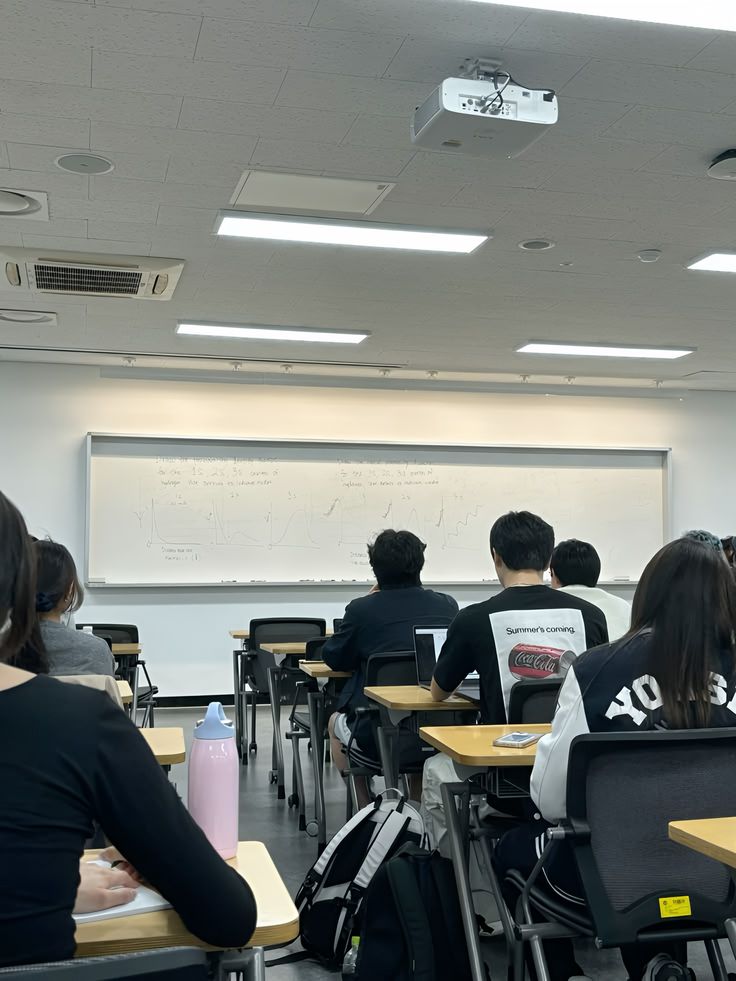
Let me say the quiet part first. Most international students who want to study in Korea never apply, because they think it is for rich kids or for people who already speak Korean. Both of those are myths. Korea wants international students badly enough that the government, and most universities, will hand you money to come. Your job is not to be the perfect applicant. Your job is to find the doors that are already open for someone exactly like you, and to walk through them on time.
That is the whole game. Here is how to play it.
- Korea pays international students to study there. Between the Global Korea Scholarship and university awards, a fully funded degree is realistic, not a fantasy.
- English-taught degrees let you in with no Korean. Korean-taught admission needs TOPIK Level 3 up front, and funded routes like GKS include a paid year of Korean. You will usually need TOPIK 4 to graduate.
- This is a learnable process, not a mystery. A clear checklist and a deadline calendar get you most of the way. Put your energy into winning funding and hitting every deadline.
- The application is a project, not a talent contest. The people who get in start about 12 months out and never miss a deadline buried inside a bigger window.
- Start with your shortlist. You cannot plan documents, essays, or scholarships until you know which schools and tracks you actually qualify for.
1. The 60-second reality check
Before you read a single word about essays or visas, find out where you stand. You probably qualify for more than you think, and you are probably aiming at the wrong schools.
There are roughly 80 universities in Korea that take international undergraduates, plus government and university scholarships layered on top. Nobody can hold all of that in their head, which is exactly why people freeze. You do not need to memorize it. You need a shortlist matched to your grades, your field, your nationality, and your budget.
If you take one thing from this guide, take this: do not start with "which is the best university in Korea." Start with "which good universities want someone like me, and what will they pay." That reframe is the difference between a stressful year and a funded one.
2. Free money first: get them to pay for it
This is the part nobody tells you clearly, so read it twice. Korea funds international students at a scale most countries do not. There are two layers, and the smart move is to apply to both.
The Global Korea Scholarship (GKS). This is the Korean government's flagship award, and it is genuinely fully funded. It covers tuition, a monthly stipend you can live on, round-trip airfare, health insurance, and a funded year of Korean language study before your degree starts. You apply through one of two tracks: the embassy track (through the Korean embassy in your country, where you can list up to three universities) or the university track (directly to one school). You can only use one track per cycle. GKS is competitive, but the application itself forces you to build the document packet you will reuse for everything else, so it is never wasted effort. Our full breakdown is in the GKS guide.
University and foundation scholarships. Here is the secret: in aggregate, university scholarships fund more international students than GKS does. Almost every university offers tuition discounts of 30 to 100 percent based on your grades and language scores, and some are effectively full rides for strong applicants. These are less competitive than GKS because fewer people know to chase them. Browse them on the scholarships page and inside each profile in the university directory.

3. You do not need to speak Korean to start
This single myth stops more people than anything else, so let us kill it properly. There are two separate language questions, and applicants confuse them constantly.
To get admitted: almost every top-20 Korean university now runs fully English-taught tracks in business, engineering, international studies, and several sciences. For those, you apply with an English score (IELTS 5.5 to 6.5, or TOEFL iBT 71 to 90, depending on the school), and zero Korean is fine. If you want a Korean-taught program, you usually need TOPIK Level 3 or higher (sometimes Level 4) before you apply, so that route means learning Korean first. And if you would rather have that funded, the Global Korea Scholarship pays for a full year of Korean before your degree begins, where you reach TOPIK Level 3, so a scholarship can be how you pick up the language rather than a hurdle.
To graduate: even inside English-taught programs, many universities quietly require you to reach TOPIK Level 3 or 4 before they will let you graduate. This lives in the academic regulations, not the glossy brochure.
The short version: English gets you in, Korean gets you out. Plan for both from day one and neither one surprises you.
4. What it actually costs (with a scholarship and without)
Let us talk real numbers, because "it depends" is the least useful answer there is. Korea is cheaper than the US, UK, or Australia, and more expensive than studying at home for many of you. Two variables move almost everything: national versus private university, and Seoul versus a smaller city.
| Item | KRW | USD (approx) |
|---|---|---|
National universities (Seoul Nat'l, Pusan Nat'l, KAIST, etc.) Per year. STEM costs 10 to 30% more than humanities. | ₩5M to ₩12M | $3,700 to $8,900 |
Private universities (Yonsei, Korea Univ, SKKU, Hanyang, etc.) Per year. English-taught tracks sit near the top of the range. | ₩8M to ₩18M | $5,930 to $13,300 |
With a 50% scholarship Very common. Many awards are tied to grades you already have. | Roughly half the above | Roughly half the above |
With GKS or a full ride Plus a monthly stipend paid to you. This is the goal. | ₩0 | $0 |
Living costs in Seoul start around ₩1.2M to ₩1.4M per month ($890 to $1,040) for a frugal student in a goshiwon or shared dorm, and ₩1.7M to ₩2.0M ($1,260 to $1,480) for something more comfortable. Outside Seoul (Busan, Daejeon, Gwangju), knock 15 to 25 percent off every line. We break this down fully in the cost of studying in Korea guide.
5. Build a real shortlist (reach, match, safe)
Now use that quiz result like a strategist instead of a fan. Spreading applications across ten dream schools does not raise your odds, it lowers them, because each one gets a weaker, more generic application.
The shape that works: two reaches, three matches, one safety. A reach is a school where your profile is below their typical admit but not impossible. A match is where you are squarely in range. A safety is one you are confident about and would genuinely attend. Six well-targeted applications beat fifteen scattered ones every time.
For each school on your list, write down three things before you fall in love with it: does it offer your field in English (if you need that), what scholarships does it actually give international students, and what is the real application deadline. The university directory has all three per school, including the institutional scholarships we hand-verify.
6. The document machine
Every Korean university wants some version of the same packet. Get clean PDFs of these early, because two of them have hidden multi-week delays that wreck timelines.
- High school diploma or degree certificate, apostilled or consular-legalized (this is the slow one, see below)
- Official transcripts, with your grading scale explained
- Passport copy, with the name that matches every other document exactly
- Family register or birth certificate proving you and both parents hold non-Korean nationality (required for most international and GKS tracks)
- Language score reports (TOPIK, IELTS, or TOEFL)
- Personal statement and study plan (section 7)
- Two or three recommendation letters
- Financial proof, a bank certification covering one year of tuition and living costs, waived if you have a scholarship
This checklist, turned into a per-school deadline plan, is the single highest-leverage hour of work in the whole process.
7. The study plan and SOP that does not sound like everyone else
Korean admissions committees read thousands of essays that say "I have always been passionate about Korea and its rich culture." Yours cannot be one of them. Two moves separate the strong ones.
Name names. Korean universities, especially for anything research-adjacent, explicitly look for applicants who know which department, which professors, and which labs they want. Generic admiration reads as "applied everywhere." Specific intent reads as "serious." Open the department page, find two professors whose work overlaps yours, and say why in plain language.
Make it a plan, not a personality. The study plan should answer four questions concretely: what you want to study, why this university specifically, what you will do during the degree, and what you will do after. Specific and slightly modest beats grand and vague.
8. GKS: embassy track or university track, decided in five questions
If you are applying for GKS, you must pick one track per cycle, and people agonize over it. Here is the fast version.
- Do you already know exactly which one school you want? If yes, lean university track. If no, embassy track lets you list up to three.
- Is your profile strongest on paper (grades, scores)? University track often rewards that directly.
- Is your profile strongest as a story (background, fit, motivation)? The embassy track's interview can favor that.
- Do you want the broadest safety net? Embassy track, three choices.
- Do you want the best per-applicant odds at one target? University track, often fewer applicants per seat.
There is no universally "better" track, only the better fit for your situation. The full mechanics, stipends, and dates live in the GKS guide.
9. The D-2 visa, so nothing surprises you
Once you have an acceptance letter, the visa flow is short and predictable.
- Your university issues a Certificate of Admission and a Certificate of Visa Issuance (a visa code).
- You take those, plus your passport, financial proof, and a photo, to the Korean embassy or consulate in your country.
- The embassy issues a D-2 student visa, valid for your program.
- Within 90 days of landing in Korea, you visit immigration (book on HiKorea) to get your Alien Registration Card (ARC).
10. Doing this alone, or with someone in your corner
Everything above, you can do yourself. Thousands of students do it every year, and this guide exists so you can be one of them. If you are organized, start early, and keep your own deadline calendar, you can absolutely get there on your own steam.
And if you would rather not do it alone, that is just as normal. Some people simply want someone in their corner for the weeks that matter: a person who reads your real drafts, talks through your shortlist, and keeps your calendar on track when life gets busy. Whichever way you go, the one thing that is not optional is applying on time.
What to do next
If you are starting from zero, this is the order.
- Run the free KoreaAdmit quiz and get your shortlist of schools and scholarships.
- Apply to GKS if you qualify, and to university scholarships as your real plan. Start with the scholarships page.
- Build your document checklist and start the apostille this week, because it is the slow one.
- Whatever path you choose, make sure you apply on time.
Frequently asked questions
Can I apply to Korean universities on my own?
Do I need to speak Korean to get into a Korean university?
Will a Korean university actually pay me to study there?
How early should I start applying to study in Korea?
What is the most common reason applications to Korean universities fail?
Related guides
Go deeper on each step:
- How to Study in Korea: the complete 2027 pillar guide
- Global Korea Scholarship (GKS): eligibility, benefits, and how to apply
- Fully funded scholarships in Korea for international students
- Study in Korea in English: English-taught degrees and TOPIK, explained
- How much does it cost to study in Korea?
- The D-2 student visa for Korea: requirements, documents, and timeline