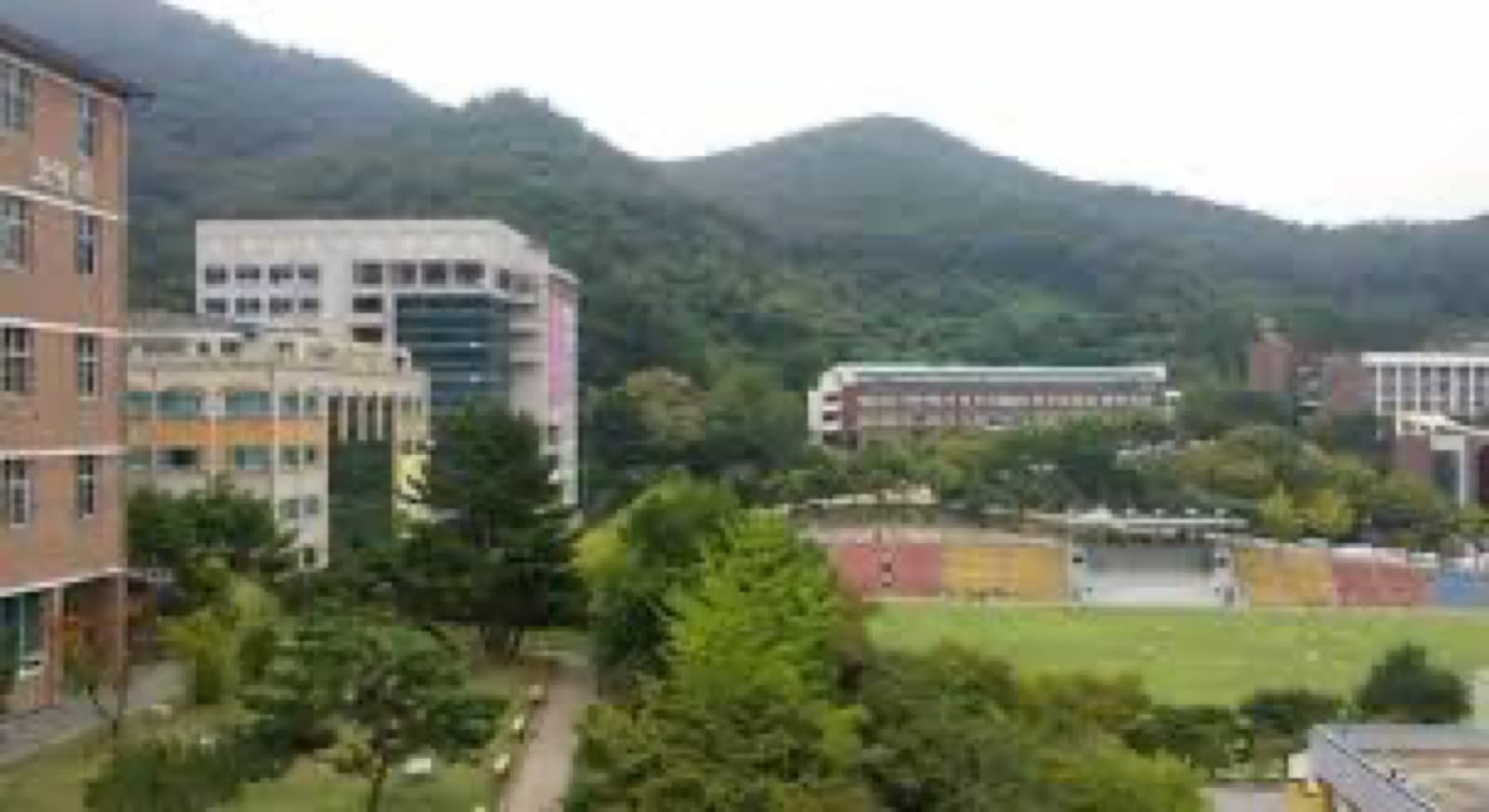
Korea University of Media Arts
Arts & Sports
Your question goes to the international admissions office. Replies come by email.
Overview
Korea University of Media Arts is a private university in Sejong, offering 14 undergraduate departments to international undergraduates. Its programs for international students are taught in Korean. The lowest Korean requirement across its programs is TOPIK 3.
Location
Where you study shapes your rent, your commute, and your daily life. Seoul and its surrounding Gyeonggi area are the busiest and priciest; regional cities cost less and move at a gentler pace.
Tuition and fees
We have not verified this university's own figure yet, so this is a planning estimate based on published average tuition for its type and fields. Confirm the exact number on the official site.
How costs and financial proof work →Living costs
Beyond tuition, budget for rent, food, transport, phone, and insurance. Costs vary most by city: living in Seoul runs noticeably higher than in a regional town.
Housing
We have not yet verified this university's own dormitory details. Most Korean universities offer on-campus housing to international students, with off-campus options nearby. Confirm availability and cost on the official site.
Student housing in Korea, explained →University scholarships
We are still verifying this university's own scholarships. In the meantime, check the official admissions site below.
Campus life
We have not yet written a verified campus-life note for this university. In the meantime, here is what daily life in Korea is like for international students.
Life in Korea for international students →Departments and majors
Programs open to international undergraduates for the 2026 GKS-U cycle. Sort or filter to find your field.
| Taught in | Starts | |||
|---|---|---|---|---|
| Arts & Sports | Department of AnimationAssociate애니메이션전공 | Korean-taught | TOPIK 3+ | Mar / Sep |
| Arts & Sports | Department of CinematographyAssociate영상촬영조명학과 | Korean-taught | TOPIK 3+ | Mar / Sep |
| Arts & Sports | Department of Comic & WebtoonAssociate만화웹툰전공 | Korean-taught | TOPIK 3+ | Mar / Sep |
| Arts & Sports | Department of Directing & ProducingAssociate영상연출학과 | Korean-taught | TOPIK 3+ | Mar / Sep |
| Arts & Sports | Department of Film ProductionAssociate영화영상학과 | Korean-taught | TOPIK 3+ | Mar / Sep |
| Arts & Sports | Department of Game ContentsAssociate게임콘텐츠전공 | Korean-taught | TOPIK 3+ | Mar / Sep |
| Arts & Sports | Department of Television, Film and Emerging MediaAssociate방송영상미디어학과 | Korean-taught | TOPIK 3+ | Mar / Sep |
| Arts & Sports | Department of VFX & Digital ContentAssociateVFX 콘텐츠전공 | Korean-taught | TOPIK 3+ | Mar / Sep |
| Arts & Sports | Department of Video Editing & ProductionAssociate영상편집제작학과 | Korean-taught | TOPIK 3+ | Mar / Sep |
| Arts & Sports | Department of WebnovelAssociate웹소설전공 | Korean-taught | TOPIK 3+ | Mar / Sep |
| Arts & Sports | Department of Webtoon IllustrationAssociate웹툰일러스트전공 | Korean-taught | TOPIK 3+ | Mar / Sep |
| Arts & Sports | Department of Webtoon ProducerAssociate웹툰PD전공 | Korean-taught | TOPIK 3+ | Mar / Sep |
| Arts & Sports | Dept. of Bachelor on Music & Sound TechnologyAssociate음향제작학과 | Korean-taught | TOPIK 3+ | Mar / Sep |
| Arts & Sports | Dept. of Moving Image DesignAssociate영상디자인학과 | Korean-taught | TOPIK 3+ | Mar / Sep |
14 of 14 departments
English-taught programs
Every program this university lists for international students is taught in Korean. You will need Korean, usually shown as a TOPIK level, to study here.
How English-taught degrees in Korea work →Admission requirements
The steps are much the same wherever you apply. Here is the shape of it, start to finish.
You will need Korean to apply here.
Every program Korea University of Media Arts lists for international students is taught in Korean, so you need a Korean proficiency level (shown as a TOPIK score) to be admitted. The lowest Korean requirement across its programs is TOPIK 3, and individual departments may ask for more. You do not always need it the day you apply: many students reach the level through a funded scholarship language year or a university language institute first, then apply with a TOPIK score in hand.
Either way, plan to keep learning Korean. Some programs still ask for a TOPIK level to graduate even when classes are in English, and daily life in Korea runs in Korean.
How the TOPIK test works →- 01Pick one program
You apply to a single university and department at a time. Choose the program whose language, field, and requirements match you, using the programs table above.
- 02Prepare and legalize documents
Gather your transcripts, certificates, and forms, and get the required ones apostilled or consular-confirmed. This step takes the longest, so start early.
- 03Submit before the deadline
Apply through the route that fits you: the Global Korea Scholarship (embassy or university track) or the university's own international admission. Watch the calendar below.
- 04Interview and results
Shortlisted applicants may sit an interview. Final results arrive in rounds, so keep an eye on your email and the official portal.
Ready to apply here?
The documents and deadlines are much the same wherever you apply. Our admissions guide walks you through the statement of purpose, study plan, transcripts and apostille, recommendation letters, and the calendar, step by step.
Open the admissions guide →Application documents
This list follows the Global Korea Scholarship requirements, the most common route international students take. A university you apply to directly may ask for a slightly different set, so always cross-check its own guideline.
- Form 1: Application Form
- Form 2: Personal Statement
- Form 3: Study Plan
- Form 4: Recommender's Information
Plus the recommendation letter itself: original, signed, and sealed in an envelope. One letter is required; up to two are allowed.
- Form 5: GKS Applicant Agreement
- Form 6: Personal Medical Assessment
- Proof of citizenship and family relationshipApostille
Proof of citizenship for you and both parents, plus an official document (birth certificate or family register) proving your family relationship.
- High school graduation certificateApostille
Or a certificate of expected graduation that states the date.
- High school academic transcriptApostille
- Associate degree graduation certificateApostille
Only if you are applying to a bachelor's program with an associate degree.
- Associate degree academic transcriptApostille
Only if you are applying to a bachelor's program with an associate degree.
- Proof of overseas-Korean status
Only for Overseas-Korean applicants. Supporting documents that prove the family relationship to your lineal ascendant.
- Proof of Korean citizenship renunciation
Only if you or a parent previously held Korean citizenship.
- Proof of Korean War veteran's descendant
Only for descendants of a foreign Korean War veteran. Adds evaluation points.
- TOPIK score report
Optional but adds points. TOPIK level 3 or above adds bonus points, and level 5 or 6 exempts the language year.
- English proficiency score report (TOEFL or IELTS)
Optional. A strong score can add language points and is preferred by some departments.
- Copies of awards and other certificates
Optional. Evidence that supports your personal statement and study plan.
- Applicant's passport copy
Submit if your proof of citizenship does not clearly indicate citizenship information.
Application timeline
The cycle runs on roughly the same calendar every year. These are the milestones to plan around.
- Embassy track application deadlinemid-October 2026
- Embassy 1st round resultslate October 2026
- University track application deadlinelate October 2026
- Embassy documents arrive at NIIEDmid-November 2026
- University 1st round resultslate November 2026
- University documents arrive at NIIEDlate November 2026
- Embassy 2nd round resultswithin November 2026
- Embassy 3rd round resultslate December 2026
- University 2nd round resultswithin December 2026
- Notify your final university choiceearly January 2027
- Final successful candidates announcedearly-to-mid January 2027
Dates for the upcoming cycle are estimates based on the last published calendar. Confirm each one on the official source when it is released.
The full application timeline →Ask the admissions office
If this page has not answered something, you can send your question to Korea University of Media Arts's international admissions office. We review each request before it is delivered, and the reply comes to your email.
Open the inquiry form ↓Working part-time
On a D-2 study visa you may work part-time after your first semester, with permission from your university and the immigration office. Weekly hours are capped during term and expanded over vacations, and the work must meet your visa conditions and pay at least the national minimum wage.
Is this university right for you?
- You are still building your Korean: some programs here open at TOPIK 3.
- You cannot study in Korean yet: every program listed here is Korean-taught.
- You need the cheapest option: this private university's tuition runs higher (from about ₩9.5M), and we have not verified its own scholarships yet.
This is guidance drawn from the facts on this page, not a prediction of your chances. Only the university decides who is admitted.
Common mistakes to avoid
- Leaving apostilles to the last minute
Legalizing documents can take weeks and depends on your home country's process. Start as soon as you have your transcripts.
- Assuming everything is in English
Many programs are Korean-taught. Confirm the language of your specific department, not just that the university offers some English options.
- Missing the one-university rule
For the government scholarship you may apply to only one university per round. Choose deliberately.
- A generic study plan
Your personal statement and study plan carry real weight. Write specifically about this university and program, not a generic love letter to Korea.
- Ignoring the TOPIK requirement
Even English-track students often need Korean eventually. Check the level your program asks for and plan your study around it.
Frequently asked questions
Does Korea University of Media Arts teach programs in English?
What TOPIK level do I need for Korea University of Media Arts?
How much is tuition at Korea University of Media Arts?
Is Korea University of Media Arts a public or private university?
When can I apply to Korea University of Media Arts?
How many programs does Korea University of Media Arts offer international students?
Your next steps
Ready to move? Here is where to go from here.
Admissions contact
- Phone
- 042-850-9144
- Fax
- 042-850-9149
- jwryu@pro.ac.kr
- Send applications to
- 30056, 300 Dahak-gil, Janggun-myeon, Sejong-si, Korea, Korea University of Media Arts (☎ 044-850-9000)
Last verified 2026-06-01
Get admissions info from Korea University of Media Arts
Ask to be introduced to the international admissions office. We review each request and deliver it with your consent; the university replies to you directly by email.
Get your Korean-university shortlist in two minutes.
Answer a few quick questions and we match you against every scholarship and university, keep your deadlines, and lay out your next steps.
- Your ranked shortlist
- Deadline reminders
- A step-by-step plan
Free forever · No card · About two minutes